Pros and Cons of Living in Lexington KY (2026)
Most weeks I'm driving someone around Lexington who found me from three states away. They've read the national "pros and cons" lists, they've stared at Zillow until their eyes crossed, and what they actually want to know is the thing those lists can't tell them: what is it really like to live here?
I can answer that one. I'm not from Lexington — I chose it. So here are the real pros and cons of living in Lexington KY, with current numbers where numbers matter.
The short version: Lexington is one of the best value-for-quality-of-life moves in the country right now. You get a genuinely beautiful city, a stable economy, strong schools, and a median home price around $375,000 — well under what the same life costs in Nashville, Austin, or Denver. The trade: you'll drive everywhere, summers are humid, your allergies will notice the move, and nobody relocates here for the nightlife. Whether that trade works depends on the life you're trying to build.
Let's take both sides seriously.
The Pros of Living in Lexington
Housing That Still Makes Sense
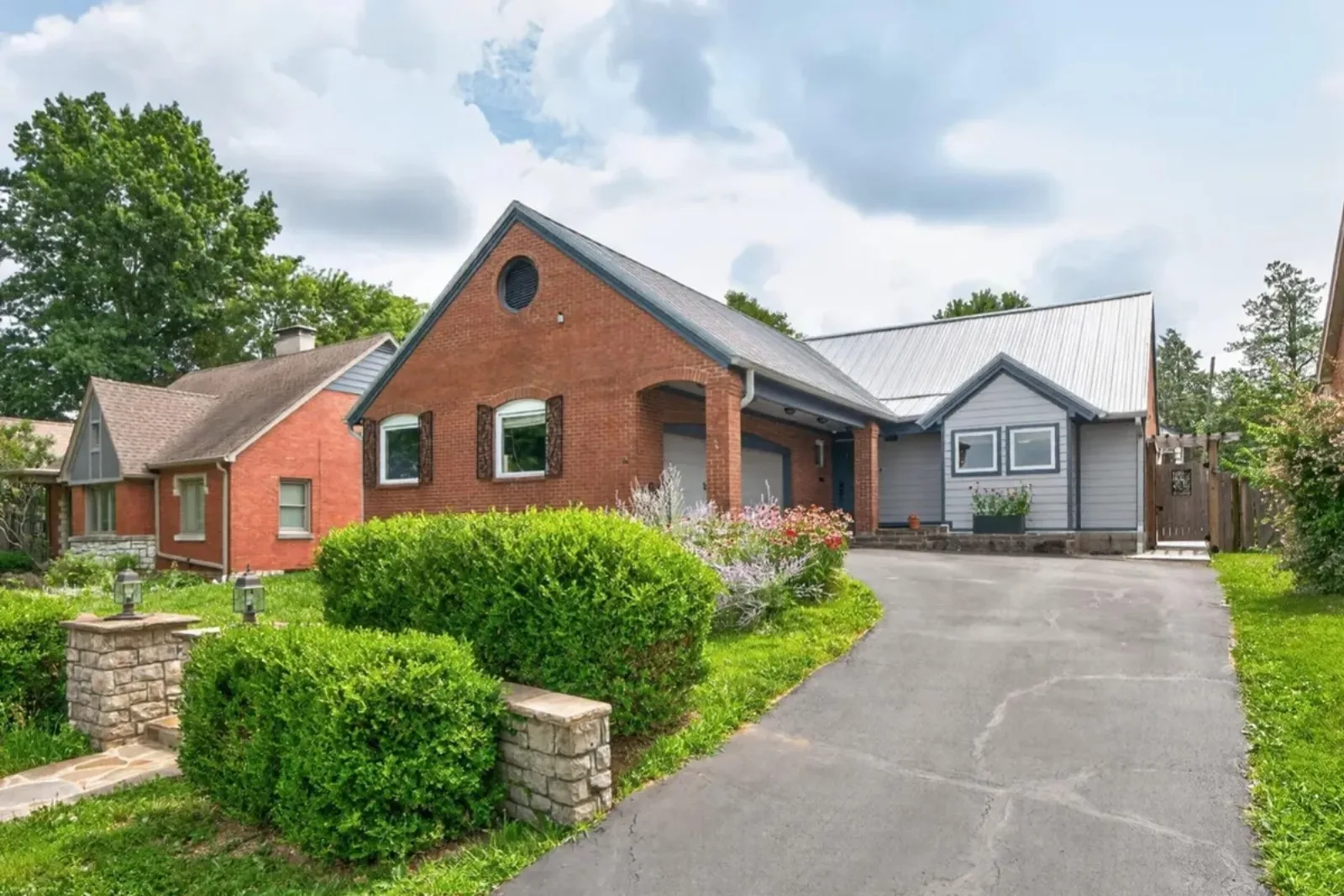
The median sale price in Lexington was $375,000 as of July 2026 (FlexMLS / ImagineMLS — the local MLS, not a national estimate). That buys a real house in a real neighborhood: a three-bed ranch in Garden Springs or Masterson Station in the high $200s, a four-bed with good schools in Beaumont or Palomar in the $300s–$400s, a historic Craftsman in Kenwick if you move fast.

One thing worth knowing: some of the national lists still quote a $225,000 "median home value" for Lexington. That number is years out of date. Plan around $375K and you'll be planning in reality.
Taxes Are Moving in Your Favor
Kentucky cut its flat income tax to 3.5% on January 1, 2026 — down from 4% last year, with the legislature openly working the rate lower. Property taxes run around 0.83% effective, below the national average, and groceries are exempt from sales tax. If you're comparing against Tennessee or Florida (no income tax), run the full math with my cost-of-living breakdown — Lexington's housing costs usually make up the difference, and then some.
The Lifestyle Is Bigger Than the City
This is the part that surprises relocators most. Keeneland runs world-class racing every April and October, and locals treat opening day like a holiday. The Bourbon Trail starts in your backyard — Woodford Reserve is about half an hour's drive through horse farms. Red River Gorge, one of the best rock climbing and hiking areas east of the Rockies, is an hour away. The food scene keeps outgrowing the city's size; you can eat very well here without a reservation strategy.
And because Lexington has maintained an urban service boundary since 1958 — the first city in the country to do it — the horse farms start where the city stops. Ten minutes from downtown you're on a two-lane road between black fences. That's not marketing. That's zoning.
A Real Economy, Not a One-Company Town
The University of Kentucky and UK HealthCare anchor the job market — a Tier 1 research university and an academic medical center in the middle of the city. Toyota's massive Georgetown plant is 20 minutes north. Add state government in Frankfort, a growing healthcare sector, and the distribution hubs that follow a city sitting a day's drive from two-thirds of the U.S. population. Lexington's economy is diversified enough that no single employer's bad year sinks the town.
Schools With Range
Fayette County Public Schools is one of Kentucky's stronger districts, with genuine standouts — SCAPA for arts, STEAM Academy, and several elementaries that families specifically house-hunt around. The private and Catholic school options are deep for a city this size. If schools are driving your search, I wrote a full school district guide — district lines matter here, and they don't follow price tags as neatly as you'd think.
College-Town Energy, Grown-Up City
UK basketball is the closest thing America has to a civic religion, and it gives the city a shared calendar and a pulse. But Lexington isn't just a college town — it's the second-largest city in Kentucky, with the hospitals, airport, and job market to match. You get the energy without the "everything closes in May" problem.
The Cons of Living in Lexington
You Will Drive Everywhere
Lexington is a car city. Lextran buses exist and are improving, but they will not replace a car for most households, and outside downtown and a handful of older neighborhoods — Bell Court, Kenwick, Chevy Chase, Ashland Park — walking to dinner is not part of the deal. If you're coming from a city where you lived on foot or on transit, this is the single biggest lifestyle adjustment, and I'd rather tell you now than after you've closed.
Your Allergies Will Know You Moved
I won't quote you a scary ranking, because the honest version is worse than a statistic: this is the Ohio Valley, the pollen is relentless, and "I never had allergies until I moved here" is something locals say to each other in April with total sincerity. Spring and fall are gorgeous and they will test your sinuses. Budget for the good antihistamines.
Summers Are Humid, Weather Is Moody
July and August run hot and thick. And Kentucky weather generally refuses to commit — 70 degrees in February, a snow flurry in March, sometimes the same week. You get four real seasons, which I count as a pro; you also get all four of them occasionally in one month.
Paychecks Run Smaller Than the Coasts
Lexington is not a high-wage market. Salaries in many fields sit below what you'd earn in Chicago, Denver, or the coasts — that's part of how the cost of living stays down. Remote workers keeping a big-market salary are playing this city on easy mode. If you're changing jobs to move here, price the whole equation, not just the house.
Nightlife and Pro Sports Are Not the Point
The distillery scene, the restaurants, and a few good music rooms carry the evenings, but if your happiness requires a downtown that's loud at 1 a.m. or an NFL Sunday in person, Lexington will feel quiet. The nearest pro teams are in Cincinnati, about 90 minutes up I-75. Around here, UK athletics is the show — and honestly, it's a good show.
Buying Here Takes Patience Right Now
The market itself is a con if you're arriving from a buyer-friendly city. Lexington had 2.01 months of housing supply in July 2026 (FlexMLS) — under three months is seller's-market territory. It's looser than the 2022–2024 sprint, and well-priced homes are negotiable again, but the good house in the good neighborhood still moves in days, not weeks. Come with your financing done.
What the National Lists Get Wrong
Most of what ranks for this search is written from a content farm, not from Lexington. Two corrections worth your time:

The prices are stale. The $225K medians floating around those lists are from another market era. Current MLS data puts the median sale at $375,000 and the median active list price at $420,000 — sellers are pricing new inventory well above what's closing, which actually creates negotiating room on homes that sit. That nuance decides real offers, and no national list will give it to you.
Nobody tells you where. "Lexington is friendly" is true and useless. What matters is that walkability lives in Bell Court and Kenwick, family-value lives in Masterson Station and Garden Springs, top-school gravity lives in Beaumont and Hartland, and estate space lives in Andover. The pros and cons of Lexington change block by block — start with my best neighborhoods guide or browse every neighborhood profile with live listing data.
Frequently Asked Questions
Is Lexington, KY a good place to live?
For most people weighing it — yes. Lexington pairs a genuinely strong quality of life (Keeneland, horse country, a real food scene, UK energy) with housing around a $375,000 median and Kentucky's falling 3.5% flat income tax. The honest caveats: it's car-dependent, summers are humid, allergies are real, and wages trail the big metros. If those trades work for you, it's one of the best-value moves in the country.
How much money do you need to live comfortably in Lexington?
Work it from the house. At the $375,000 median with 10% down and a 30-year rate near the mid-6s (Freddie Mac's July 2026 average is 6.49%), principal and interest lands right around $2,130 a month before taxes and insurance. Using the standard keep-housing-under-a-third guideline, a household income in the $91,000–$102,000 range carries the median home comfortably — and renters can still find two-bedrooms in the $1,100–$1,300 range.
What are the biggest downsides of living in Lexington?
Car dependence is the big one — transit is limited and most errands mean driving. After that: humid summers, an allergy season locals genuinely warn each other about, below-coastal wages in many fields, and a quiet nightlife by big-city standards. None of them are dealbreakers for most families; all of them are real.
Is Lexington cheaper than Louisville or Nashville?
Lexington and Louisville are close on cost, with Louisville slightly cheaper on housing and Lexington generally stronger on schools and median incomes — I wrote a full Lexington vs Louisville comparison. Nashville is a different tier: comparable homes and overall costs run meaningfully higher there, which is why a steady stream of Nashville buyers keeps landing here.
What's the Lexington housing market like right now?
As of July 2026: $375,000 median sale price, 2.01 months of supply, and new listings up sharply through the spring (FlexMLS / ImagineMLS). It's still a seller's market on the numbers, but a rebalancing one — buyers have more selection and more negotiating room than any point in the last three years. My monthly market updates track it as it moves.
Thinking About Making the Move?
Whether you're two years out and just researching, comparing Lexington against another city, or already scrolling listings on your lunch break — I'd love to chat. Helping people decide whether Lexington fits is genuinely my favorite part of this job, and I'll tell you the cons as readily as the pros.
Reach out anytime — let's figure out whether Lexington is your next step.
Data: FlexMLS / ImagineMLS Market Summary, Lexington residential, through July 2026; Kentucky Department of Revenue (2026 tax rates); Freddie Mac Primary Mortgage Market Survey (July 2026). Raya Rivera is a real estate advisor with The Brokerage in Lexington, KY.