The Home Inspection in Lexington KY: A Buyer's Field Guide
The best money my buyers spend is never on the house. It's the few hundred dollars they spend on the person who crawls under it.
Here is how the home inspection actually works in Lexington — what it costs, what it catches, the one local test you should never skip, and how to use the report like a negotiator instead of a worrier.
The short version: a standard Lexington home inspection runs roughly $300 to $450, takes two to four hours, and is performed by an inspector the state of Kentucky licenses and requires to carry insurance. No law requires you to get one — get one anyway, add the radon test every time (Fayette County sits in the EPA's highest-risk radon zone), and treat the report as your negotiation sheet, not a pass/fail grade.
Buying soon and want an inspector I'd put my own name behind? Ask me — I keep a short list of the ones whose reports hold up.
What a Home Inspection in Lexington Covers — and What It Doesn't
A licensed inspector spends two to four hours on the systems that cost real money: roof, foundation and structure, electrical panel and wiring, plumbing, HVAC, water heater, attic, insulation, windows, and drainage around the house. You get a written report, usually with photos, within a day or two.
What it is not: an appraisal (that answers value, not condition), a code inspection (older homes are allowed to be older), or a guarantee. Inspectors examine what they can see and reach — they do not open walls, and they will tell you where they couldn't get eyes. Those "recommend further evaluation" lines are not filler; they are homework.
Kentucky licenses this profession through the Kentucky Board of Home Inspectors: required training, a board-approved exam, supervised inspections, and liability insurance before anyone can hang a shingle. Ask for the license number. The good ones volunteer it.
The Lexington-Specific Item: Radon Is Not Optional Here
If you take one thing from this guide, take this. The EPA maps Fayette County in Zone 1 — its highest radon-potential category — and county-level data puts the average indoor reading around 8 pCi/L, double the EPA's 4.0 action level. The Bluegrass sits on limestone karst, and the same geology that gives us the horse farms gives radon easy pathways into basements and crawl spaces.
Kentucky law does not require radon testing when a home sells. That is precisely why you order it with your inspection — a 48-hour test, a modest add-on fee, and you know. If it comes back high, mitigation is a routine, few-thousand-dollar fix that you negotiate like any other finding: seller installs it, seller credits it, or you price it in. The only bad outcome is not testing.
Older Lexington Homes: Where the Inspection Earns Its Fee
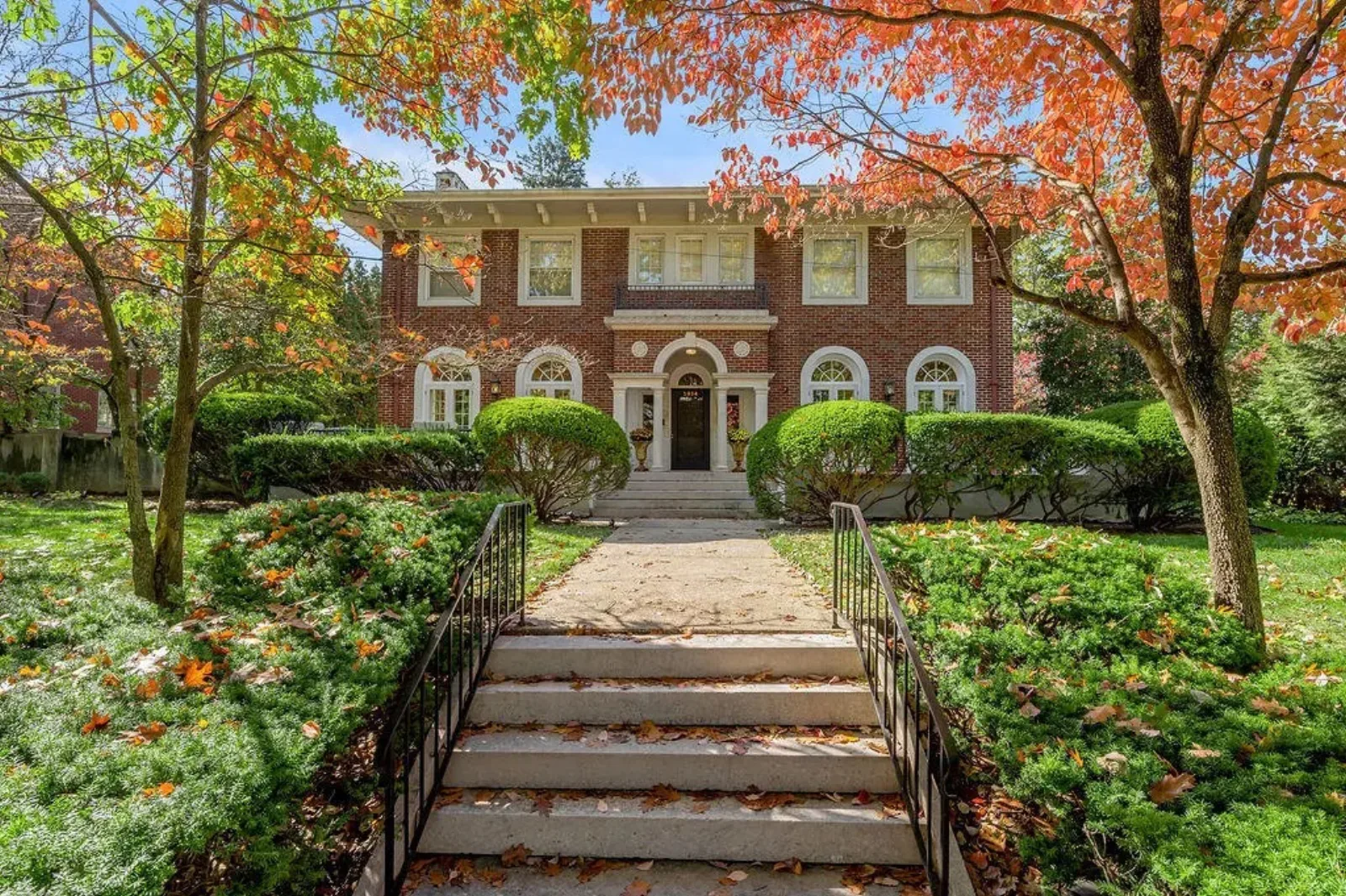
A big share of what makes Lexington worth living in is its older housing — the 1920s foursquares near Chevy Chase, the bungalows in Kenwick, the mid-century ranches ringing the city. I love these houses. I also walk into them expecting the inspection to have content.
Homes of those eras can carry original-era electrical service, aging galvanized supply lines, clay sewer laterals at the end of their design life, and foundations that have had a century to settle. None of that is automatically a dealbreaker — most of it is normal aging with known fixes and known prices. For anything pre-1980 I also recommend the sewer-line camera scope as an add-on: a buried lateral is the one big-ticket item a standard inspection physically cannot see. If you're weighing a project house on purpose, my fixer-upper guide covers where that math works.
Halfway through a house hunt and not sure how hard to inspect? Tell me the house — I'll tell you what I'd order for it, era by era.
After the Report: Negotiate Like It's a Tool, Because It Is
Every inspection report looks alarming — forty pages, red flags, photos of pipes you've never thought about. Breathe. Then sort everything into three buckets:
Safety and structure — electrical hazards, active leaks, foundation movement, a failing roof. These are the negotiate-hard items: repairs, credits, or a price change.
Aging systems — the fifteen-year-old furnace that works today. You are buying a used house; these are tomorrow's budget, not today's demand letter. Knowing about them is the win.
Cosmetics and maintenance — caulk, filters, a cracked outlet cover. Asking a seller for these marks you as a buyer who can't tell big from small, and it costs you goodwill you may need for the real items.
On the real items, I usually push for a credit instead of a seller repair — the seller's incentive is the cheapest contractor who'll close the item; yours is the right fix. And in the current market (22.6 days on market on average, sellers capturing 98.8% of asking), a focused three-item ask on a home that's been sitting gets real traction, while a forty-line punch list gets you nothing on a first-week listing. Same report, different leverage — know which house you're standing in.
Where the Inspection Fits in Your Timeline
The inspection window in a Kentucky contract is negotiated — commonly a week or two after acceptance. Book the inspector the day your offer is accepted, not the week after; the good ones queue up. Get pre-approved before you shop, inspect right after acceptance, and the rest of the timeline — appraisal, underwriting, closing — stacks up behind it cleanly. VA buyers, note: the VA's own appraisal checks minimum property condition, but it is not an inspection and was never meant to be one — my VA loan guide explains the difference.
Frequently Asked Questions
How much does a home inspection cost in Lexington?
Local quotes generally land in the $300 to $450 range for a standard single-family inspection, with Lexington typically running a bit cheaper than Louisville. Size, age, and add-ons like radon or termite testing move the number. Against the price of the house, it is the cheapest professional opinion you will ever buy.
Is a home inspection required in Kentucky?
No law requires one, and no lender makes you get one on a standard purchase — the appraisal is for the bank, not for you. It is still the single step I refuse to let my buyers skip. The inspection is the only part of the transaction whose entire job is protecting you.
Are home inspectors licensed in Kentucky?
Yes. Kentucky licenses home inspectors through the Kentucky Board of Home Inspectors — required training hours, a board-approved exam, supervised inspections, and liability insurance before they can practice. Ask for the license number and proof of insurance; a good inspector offers both before you ask.
Should I test for radon when buying a home in Lexington?
Yes, every time. The EPA puts Fayette County in Zone 1, its highest radon-potential category, and county-level data puts the average indoor level around 8 pCi/L — double the EPA's 4.0 action level. Kentucky law does not require testing at sale, which is exactly why you order it yourself. Mitigation is a routine fix, but only for problems you know about.
What happens if the inspection finds problems?
Almost every inspection finds problems — the report is a starting point, not a verdict. You can ask the seller to repair specific items, take a credit and handle it yourself, renegotiate the price, or walk away if your contingency allows it. I usually push for credits over seller repairs: you control the contractor and the quality.
Should I ever waive the inspection to win a house?
I would not let a client of mine do it on a Lexington resale, and I would say so out loud. If you must compete harder, shorten the inspection window or offer an information-only inspection with a right to walk — both keep your eyes open. Buying blind to save a few days is how a bidding-war win becomes a five-figure surprise.
Inspect Hard, Buy Confident
The inspection is not the step where deals die. It's the step where you find out what you're actually buying — and in my experience the buyers who inspect hardest close the most confidently, because nothing about the house is a mystery to them by closing day.
Want an inspector shortlist, or a second opinion on a report sitting in your inbox right now? Reach out — and if you're still shopping, the current Lexington listings are one click away.
Licensing per the Kentucky Board of Home Inspectors; radon classification per the EPA's county zone map and published Fayette County averages — confirm current figures with your inspector and radon professional. Inspection prices reflect typical local quotes and vary by provider. Market data: Bluegrass Realtors / FlexMLS, July 2026 Lexington residential. Raya Rivera is a real estate advisor with The Brokerage in Lexington, KY.