Land for Sale in Lexington KY: What to Know Before You Buy Acreage
People often ask me to find them "a few acres just outside town" so they can build. It is a great plan almost anywhere else. In Fayette County it runs straight into a set of rules that most land portals never mention, and knowing them first is the difference between buying a homesite and buying a very expensive field.
So here is how land for sale in Lexington KY actually works: why acreage works differently here, where buildable land actually is, and the checklist I run before anyone writes an offer on dirt.
The short version: Fayette County is split by the Urban Service Boundary, drawn in 1958 and the first of its kind in the country. Inside it, land is mostly subdivided into lots for development. Outside it, the Agricultural Rural zone carries a 40-acre minimum lot size, so small rural homesites are rare. Buyers who want five or ten acres usually end up looking at existing rural parcels with verified building rights or in the surrounding counties. Whatever you buy, confirm zoning, septic or sewer, water, access and the survey before you close.
Looking at a specific parcel right now? Send me the listing and I'll tell you what questions to ask before you fall for it.
Why Land for Sale in Lexington Works Differently
In 1958 Lexington drew a line around the city and decided that sewers, and the dense development that follows them, would stay inside it. That line is the Urban Service Boundary. About 30 percent of Fayette County, roughly 85 square miles, sits inside it. The other 70 percent, about 200 square miles, is the Rural Service Area: the horse farms, crop land and preserved countryside that make the drive into town look the way it does.
The boundary does move, but rarely and deliberately. The most recent expansion came in 2023, when the Council voted to expand the boundary and the Planning Commission recommended 2,800 acres across five locations. That scarcity is why buildable land inside the line is mostly bought by builders and developers, and why so much of the new-home activity you see is in planned neighborhoods. My new construction guide and master-planned communities roundup cover that side of the market. If you want the longer story of how the boundary came to be, it's in my history of Lexington.
The 40-Acre Rule Outside the Boundary
This is the one that surprises people. Under the Lexington-Fayette zoning ordinance:
- Agricultural Rural (A-R): 40-acre minimum lot size. Single-family houses are a permitted use, on a lot that meets the minimum.
- Agricultural Buffer (A-B): 10-acre minimum, in the areas that transition between the city and the countryside.
- Agricultural Natural Areas (A-N): 40-acre minimum.
You will see some smaller rural homes on ten-acre lots. Many date from a temporary A-R provision that let an existing, occupied house be split off its farm onto at least ten acres with 250 feet of frontage, as long as at least 40 acres stayed with the farm. That window closed under the ordinance's own three-year sunset. It does not let anyone carve a fresh homesite out of a farm today.
So when you see a small rural parcel for sale in Fayette County, the first question is not the price. It is whether a house can legally go on it. Existing lots of record can follow different rules than newly created ones, which is exactly why I have buyers confirm the answer with the Division of Planning, in writing if possible, before the contract goes firm.

Where Buyers Actually Find Acreage Near Lexington
If you want land rather than a farm, the realistic options fall into three groups:
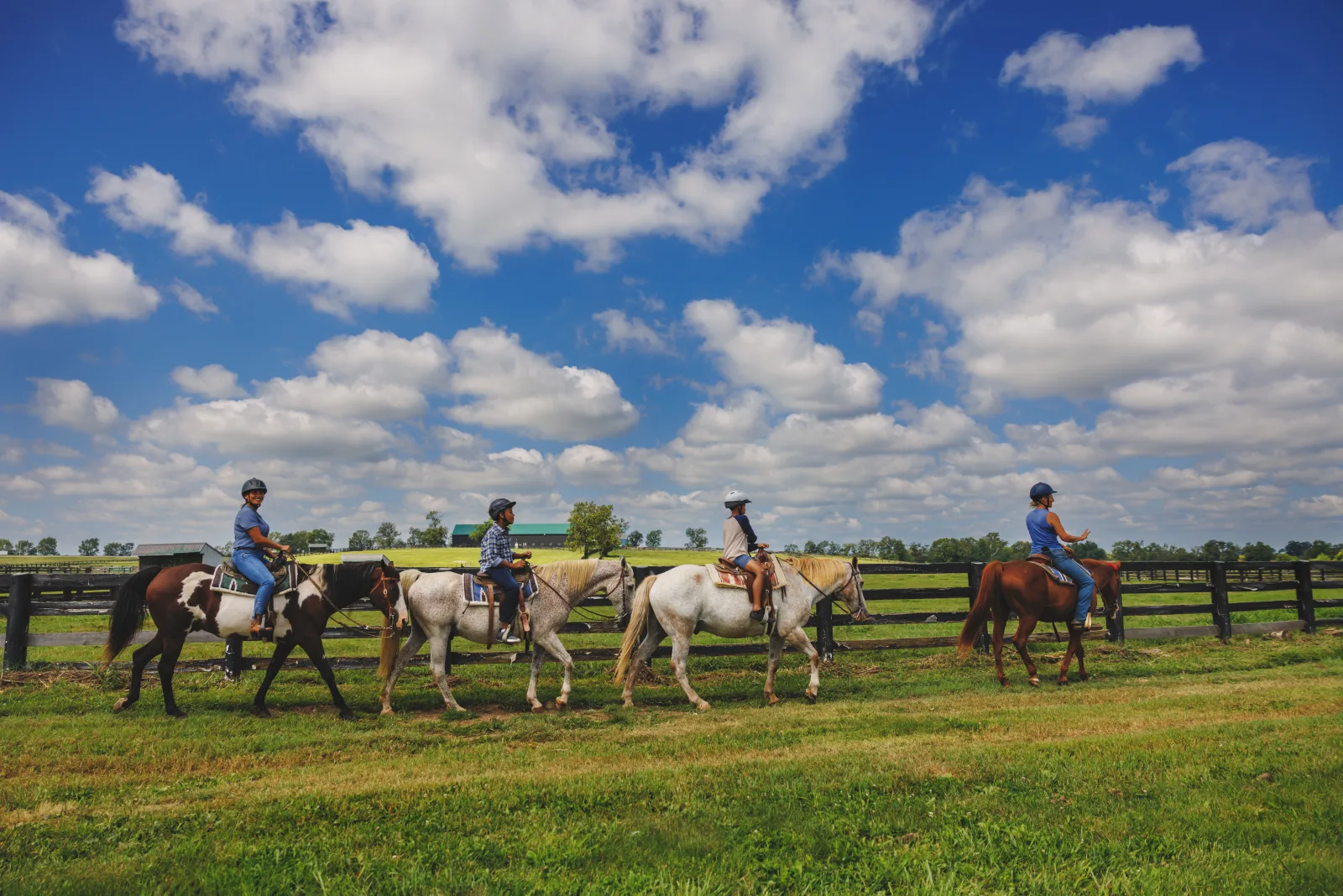
- Large Fayette County tracts. Forty acres and up, often existing farms. This is the horse country end of the market, and the land often comes with barns, fencing and history.
- Existing rural homes on their own acreage. A house that already sits on a legal rural lot. You are buying the building rights along with the view, which is usually the cleanest path to country living inside the county.
- The surrounding counties. Scott, Jessamine, Woodford, Clark, Madison and Bourbon counties all border Fayette, and each sets its own zoning and minimum lot sizes. That is where most small-acreage homesites within an easy drive of Lexington are found. My Georgetown guide is a good starting point for Scott County. Check that county's planning office on any parcel, because the rules change at the county line.
Trying to decide between a Fayette farm and five acres a county over? Let's talk through the tradeoffs. Commute, schools and resale all shift at the county line.
My Due-Diligence Checklist for Raw Land
A house comes with most of its answers built in. Land does not. Before any land contract goes firm, I want these answered:
- Zoning and building rights. What the parcel is zoned, whether a house is permitted on it, and the setbacks and frontage rules that apply.
- Sewer or septic. Outside the boundary there is no city sewer. Every onsite sewage system in Fayette County is permitted through the Lexington-Fayette County Health Department, which evaluates the site to decide whether and where a system can go. Make the purchase contingent on that evaluation.
- Water and utilities. Whether public water and electric reach the parcel, and what it costs to bring them in if not.
- Access. Frontage on a public road, or a recorded easement if the parcel sits behind another property. A handshake driveway agreement is not access.
- Survey and boundaries. A current survey, especially on older farm parcels where fence lines and deed lines don't always agree.
- Floodplain and topography. Low ground near a creek can limit where you can build or drive.
- Easements and restrictions. Conservation easements, utility easements and deed restrictions all run with the land. Thousands of acres in the Rural Service Area are permanently protected through the city's Purchase of Development Rights program. That land can be bought and farmed, but it cannot be developed, so read the deed before you plan anything.
Property Taxes and Agricultural Value
Kentucky lets qualifying farmland be assessed at its agricultural value rather than its full market value, under KRS 132.450. State law defines agricultural land as at least ten contiguous acres used for production: livestock, crops, timber and the like. You apply through the county Property Valuation Administrator, and the farming has to be real. My Fayette County property tax guide explains how the rest of your bill is calculated.
Financing Land
Lenders see raw land as riskier than a finished house, so land loans generally ask for more money down and carry different terms than a standard mortgage. If you plan to build, a construction loan may be the better path once the land is secured. Either way, talk to a lender who does land and construction lending before you write the offer, not after.
Frequently Asked Questions
Can I buy five acres and build a house in Fayette County?
Usually not as a new lot in the rural part of the county. Land in the Agricultural Rural zone has a 40-acre minimum lot size, and the buffer zone near the boundary has a 10-acre minimum. An existing lot of record can follow different rules, so before you buy a small rural parcel, confirm with the Lexington-Fayette Division of Planning that a house can actually go on it.
What is Lexington's Urban Service Boundary?
It is the line, drawn in 1958 and the first of its kind in the country, that separates the part of Fayette County served by city infrastructure like sewers from the rural farmland around it. About 30 percent of the county sits inside it and about 70 percent outside, and in 2023 the city approved expanding it by 2,800 acres across five locations.
Do I need a septic evaluation before buying rural land?
If the land will not connect to public sewer, yes, in practice. Every onsite sewage system in Fayette County is permitted through the Lexington-Fayette County Health Department, which evaluates a site to determine whether and where a system can go. Make the purchase contingent on that result.
Will my land be taxed at agricultural value?
Possibly. Kentucky allows qualifying farmland to be assessed at its agricultural value instead of full market value under KRS 132.450, and state law defines agricultural land as at least ten contiguous acres used for production. You apply through the county PVA, and the use has to be real.
Is financing land different from financing a house?
Yes. Raw land is harder to lend on than a finished home, so land loans generally ask for more money down and carry different terms, and some buyers use a construction loan once they are ready to build. Talk to a lender who does land and construction lending before you write an offer.
Ready to Look at Land?
The good parcels around Lexington are rarely the ones that look cheapest online. They are the ones where the building rights, the water and the access are already settled. Tell me what you want to do with the land, whether that's a house, a few horses or a long-term hold, and I'll help you find parcels that can actually do it.
Browse the current listings, then reach out or call me at (859) 710-9033. Let's talk.
Sources: Lexington-Fayette Urban County Government Zoning Ordinance, Article 8 (A-R, A-B and A-N zones); CivicLex, "The Urban Service Boundary"; Lexington-Fayette County Health Department onsite sewage program; KRS 132.450 and KRS 132.010. Zoning and permitting rules change, so confirm any parcel with the Division of Planning and the Health Department before you buy. This is general information, not legal advice. Raya Rivera is a real estate advisor with The Brokerage KY in Lexington.