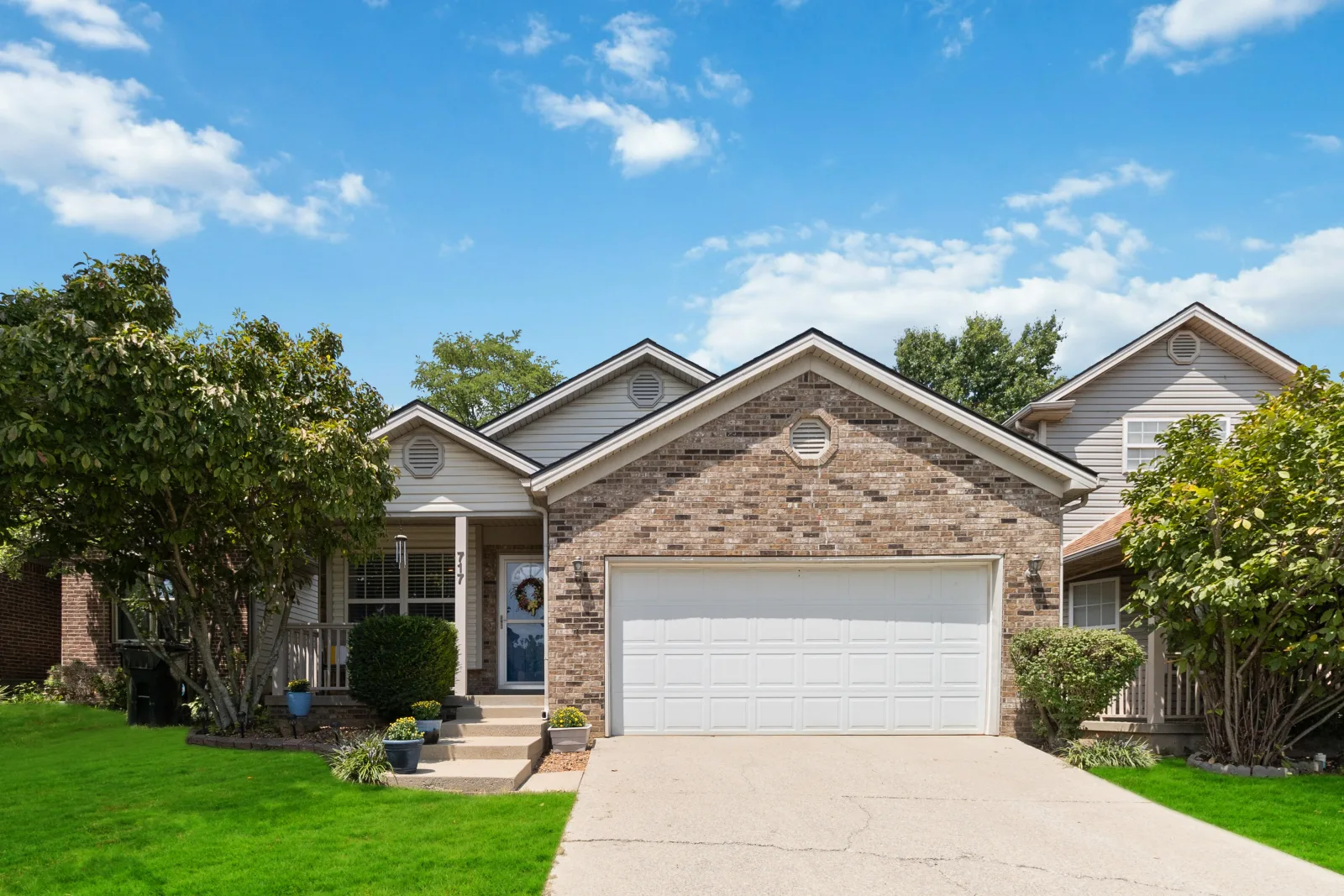
Condos for Sale Lexington KY: Condos, Townhomes and What HOA Life Costs
Search "condos for sale Lexington KY" and the results mix two kinds of property that Kentucky law treats differently. A condo and a townhome can look identical from the curb. The difference is what you actually own, who insures the building and how the association can change your monthly bill. This guide covers that, and where attached homes sit in the city.
The short version: Under the Kentucky Condominium Act, a condo is real estate where each owner holds a unit separately and the rest is owned in common by the unit owners. A townhome on its own lot, in a community whose deed, plat or declaration sets up an association, falls under the 2023 Planned Community Act instead: you own the lot and the home, and the association runs the common area. "Townhome" describes the building, not the ownership, so the recorded documents decide. Dues vary by community, and I pull current dues for any listing on request.
Weighing a condo against a townhome? Send me both listings and I'll tell you which kind of ownership each one is and what the association charges.
Condo vs Townhome: What Kentucky Law Actually Says
Kentucky's Condominium Act (KRS 381.9101 to 381.9207) defines a condominium as "real estate, portions of which are designated for separate ownership and the remainder of which is designated for common ownership solely by the owners of those portions." You own your unit. Everything else is a common element, owned by all the unit owners together, and under the Act a condominium is created only by recording a declaration in the county where it sits (KRS 381.9125).
Age matters. The Act governs condos created after January 1, 2011. Older ones were created under the 1962 Horizontal Property Law (KRS 381.805 to 381.910). A listed set of the Act's sections, including association powers, records and the seller's resale certificate, applies to those older condos for events after January 1, 2011, their owners can vote to come fully under the Act, and their boards can rely on it for a public health or safety issue (KRS 381.9103).
"Townhome" is a building style, not a form of ownership. The Horizontal Property Law's definition of a condominium project includes "townhouses," so some townhomes are condos. Others sit on individual lots, governed since June 29, 2023 by the Planned Community Act (KRS 381.785 to 381.801). It covers "a group of residential dwellings, excluding condominiums, composed of individual lots" where a deed, common plan or declaration requires that all owners join an association, that owners or the association hold or lease property or facilities for all owners, or that owners support such property or facilities through membership fees. Homes that share "common walls, roofing, or other common structural elements" count. It does not reach a neighborhood with no homeowners' association established by declaration, plat or deed, or one whose only shared maintenance cost is a common access road.
| Question | Condo | Townhome on its own lot |
|---|---|---|
| What you own | Your unit, plus an undivided interest in the common elements | Your lot and the home on it |
| Upkeep | Association: common elements. You: your unit. Unless the declaration says otherwise (condos created after 2011) | Association: the common area. The declaration says what else, if anything |
| Association insurance | Property and liability on the common elements, where reasonably available (condos created after 2011) | Property at replacement cost and liability on the common areas, unless the declaration says otherwise (associations formed after June 29, 2023) |
This is general information, not legal or tax advice. Your deed, the recorded documents and an attorney have the final word on a specific property.

Townhomes for Sale in Lexington: Condo or Planned Community?
A listing's property type is a starting point, not an answer. With townhomes for sale in Lexington, I sort out the ownership first, because it decides which statute applies. A planned community formed after June 29, 2023 must record a declaration with the county clerk (KRS 381.786), while older ones may run on a deed or a plat. One rule reaches back to older communities: the Planned Community Act's assessment section "shall override any limitation on the amount of assessments or the amount of annual increases" in existing declarations, bylaws, rules or regulations (KRS 381.797).
Condos for Sale Lexington KY: Where the Attached Homes Are
Downtown mixes converted lofts, purpose-built condo buildings, historic townhouses and newer infill. My downtown Lexington living guide covers it, and the downtown neighborhood page shows what is listed there now.
Kentucky's business registry also lists an active Fayette County homeowners' association for the Masterson Station Furlong View Townhomes, and my Masterson Station neighborhood page covers the area. My master-planned communities guide covers the larger HOA subdivisions.
Outside downtown, search by property type, not neighborhood name. For scale, Lexington had 775 active residential listings in September 2026, and the median residential sale price was $360,000, per Imagine MLS. Those are citywide residential figures, not condo or townhome numbers; I pull those for a specific search on request. Trading a yard for less upkeep? My downsizing guide compares condos, townhomes and patio homes.
Found a Condo or Townhome You Like?
Send me the listing. I'll confirm whether it is a condo or a planned-community lot and pull the current dues. Let's talk it through.
What HOA and Condo Dues Actually Pay For
There is no reliable typical dues number for Lexington, so I won't invent one. The law does spell out how dues get set.
In a condo, common expenses are what the association spends or owes as the declaration or the Act allows, "together with any allocations to reserves" (KRS 381.9105). For condos created after 2011, once the association starts assessing, assessments come at least annually from a budget adopted at least annually and split among units by the declaration's allocations, with exceptions such as costs that benefit only certain units (KRS 381.9191).
In a planned community, common expenses include "all costs incurred in the administration, governance, and maintenance of an association, including but not limited to insurance premiums and expenses, maintenance and repair expenses, and any reserves for replacement of the common areas," allocated equally among the lots (KRS 381.796). The board must send owners the budget within 30 days of adopting it. If it rises more than 15% over the prior year, owners get a special meeting, and the budget stands unless a majority of all owners, or a larger vote the declaration sets, rejects it, in which case the old budget continues (KRS 381.797).
Special Assessments and Reserves
Condos: Whatever the declaration says, a condo association may impose an emergency assessment on the affected units to comply with a court order, or to repair an emergency condition of a common structural, utility or mechanical component that has made, or is in imminent danger of making, any unit or common element unsafe, uninhabitable or uninsurable. A repair needs a sealed opinion from a professional engineer or licensed architect first. The vote is a simple majority of owners present at a special meeting or 75% of the executive board, and a simple majority of all owners can reduce or rescind it at a special meeting (KRS 381.9167).
Planned communities: The board can levy a special assessment if it finds the purpose is in the association's best interests and the money goes primarily to maintaining the common areas and other areas the declaration makes the association responsible for, including capital expenditures. After the developer's control period, it takes a majority of the full board, an owners' meeting must follow within 30 days, and a majority of the total number of lots can rescind or reduce it (KRS 381.797).
Reserves are the money set aside for big repairs, so I look at them first. The planned community statute says a budget "may include reserves." May, not must. In a condo, the seller's resale certificate states the reserves, if any, and the capital expenditures the association expects this fiscal year and, if known, the next two.

Insurance: The Master Policy and Your HO-6
A condo is usually covered by two policies. For condos created after 2011, the Act requires the association, from the first sale of a unit by the developer and to the extent reasonably available, to carry property and liability insurance on the common elements, and to notify every owner if that coverage isn't reasonably available. Its policy does not stop owners from buying their own (KRS 381.9187). That owner policy is known as an HO-6, and the National Association of Insurance Commissioners describes the condominium unit owners form as insuring "your personal property and your walls, floors and ceiling." Where one policy stops and the other starts depends on the declaration, so its insurance section is worth handing to your insurance agent before closing.
For townhomes, the NAIC's consumer guide says an owner "may insure it through either an individual homeowners policy or an association master policy." For associations formed after June 29, 2023, the statute requires replacement-cost property and liability insurance on the common areas, plus whatever the declaration or bylaws add, unless the declaration provides otherwise (KRS 381.790).
Financing: The Lender Looks at the Community, Too
With a condo, the lender reviews the project as well as you. HUD says FHA insures condo loans "to purchase or refinance a unit in an FHA-approved condominium project or in a project that is not FHA-approved but meets the Single-Unit Approval requirements." For Single-Unit Approval, the project must be complete and ready for occupancy, have at least five dwelling units and not be a manufactured home, and meet a subset of HUD's project requirements, including FHA insurance concentration, owner-occupancy percentage and financial condition.
Fannie Mae's Selling Guide lists cases where it does not require a thorough project review, including detached condo units, some small condo projects and, with limited exceptions, units in a PUD, its term for a project or subdivision whose common property is owned and maintained by an HOA. Your lender decides which review applies. My FHA loan guide and first-time homebuyer guide cover the rest.
What to Ask For Before You Write an Offer
Whatever the listing calls it, I want this early:
- The governing documents: declaration, bylaws and rules, and for a townhome, the plat and any deed restrictions.
- The current budget, the latest financial statements and the reserves.
- Special assessments, current or under discussion, and anything the seller owes.
- The association's insurance and any lawsuits involving the association.
- An inspection. My home inspection guide covers what to expect.
For condo units, KRS 381.9203 requires the seller, with limited exceptions such as foreclosures and court-ordered sales, to furnish the declaration, bylaws, rules and an association certificate covering most of that list, including the monthly assessment, reserves, the operating budget, insurance and certain pending suits. The association's fee for preparing it is capped at the lesser of $225 or 80% of the unit's current monthly assessment (KRS 381.9167). That is a condominium statute, so for a townhome on its own lot, ask the seller and the association for the same documents.
This is general information, not legal or tax advice. The association's documents and your lender have the final word on your situation.
Frequently Asked Questions
What is the difference between a condo and a townhome in Kentucky?
Under the Kentucky Condominium Act, a condo is real estate where portions are owned separately and the rest is owned in common by those owners. A townhome on its own lot in a community whose documents establish a homeowners' association is part of a planned community under KRS 381.785 to 381.801. Some townhomes are condos, so the recorded documents decide.
How much are HOA dues for condos and townhomes in Lexington?
They vary by community, and there is no reliable citywide figure. I pull the current dues and the association's budget for any listing on request.
Can a condo association charge a special assessment in Kentucky?
Yes. KRS 381.9167 lets a condo association impose an emergency assessment to comply with a court order or, after a sealed engineer's or architect's opinion, to repair an emergency condition in a common structural, utility or mechanical component that has made, or is in imminent danger of making, a unit or common element unsafe, uninhabitable or uninsurable. Planned communities follow KRS 381.797.
How does insurance work for a condo in Kentucky?
Usually with two policies. For condos created after January 1, 2011, KRS 381.9187 requires the association to carry property and liability insurance on the common elements, to the extent reasonably available. The owner's HO-6 policy is separate.
Does Kentucky have a law for townhome and subdivision HOAs?
Yes. The Planned Community Act, KRS 381.785 to 381.801, took effect June 29, 2023. It covers residential lots where a deed, common plan or declaration requires association membership or shared facilities, and it sets rules for budgets, assessments, special assessments and insurance.
Let's Find the Right Kind of Attached Home
A condo or townhome can be a smart way to own in Lexington, as long as you know what you are buying into: the building, the budget and the people running it. If you want help sorting listings or reading association documents, reach out or call me at (859) 710-9033. When you are ready to look, start with homes for sale in Lexington.
Sources: KRS Chapter 381, Kentucky Condominium Act, Planned Community Act and Horizontal Property Law (Kentucky Legislature); Kentucky Secretary of State business records; HUD, FHA Condominiums; Fannie Mae Selling Guide B4-2.1-01; NAIC, A Consumer's Guide to Home Insurance; Maryland Insurance Administration condominium FAQ. Data: Imagine MLS (Bluegrass REALTORS), September 2026. Checked October 18, 2026. Raya Rivera is a real estate advisor with The Brokerage KY in Lexington, KY.