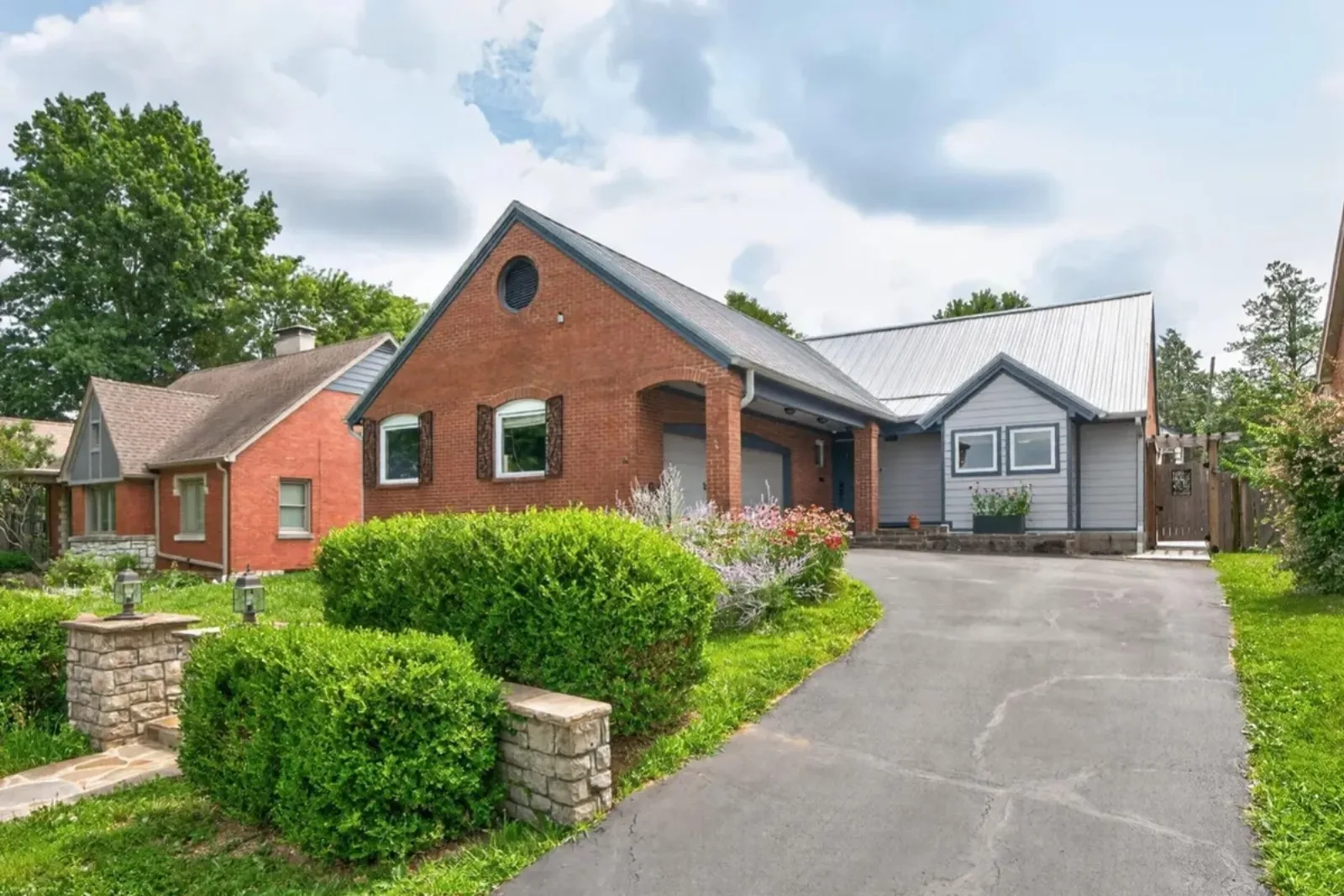
How to Sell Your Home in Lexington, KY
Selling your home is one of the biggest financial decisions you’ll make, and in Lexington’s current market the right strategy is the difference between a good sale and a great one. The short version: price to the last 30 days of closed comps, prepare and stage before the photographer shows up, disclose honestly on Kentucky’s Form 402, market beyond the MLS listing, and know your closing costs before you count your proceeds. This guide walks through each step the way I run it for my own sellers.
Want to know what your home would sell for in this market? Get a free home-value analysis →
The Lexington Market: What Sellers Need to Know
Lexington remains a seller-leaning market: about 2.01 months of housing supply and a median sale price of $375,000 (FlexMLS, July 2026). Anything under roughly four months of supply favors sellers — but buyers are more informed than ever, new listings are hitting the market faster than they’re being absorbed, and sellers are asking more on new listings than recent closings support. Translation: pricing and presentation decide which homes get multiple offers and which ones sit.
Market numbers move monthly, so this guide deliberately doesn’t carry a stats dashboard. For current figures, read the latest Lexington market report or the standing Lexington housing market overview.
Step 1: Choose the Right Real Estate Agent
Your agent is your most important partner in the selling process. Look for someone who knows the Lexington market inside and out, has a proven track record, and will develop a custom marketing strategy for your specific property.
What I bring to every listing:
- Comprehensive market analysis to determine the optimal price point
- Professional photography and virtual tour creation
- Strategic marketing across MLS, social media, and targeted digital advertising
- Network of pre-qualified buyers actively looking in Lexington
- Skilled negotiation to maximize your final sale price
- Full-service support from listing to closing
Step 2: Price It Right (This Matters Most)
If you take one thing from this guide, take this: pricing is the single biggest factor in what you actually walk away with. Overpricing is the #1 mistake I see sellers make — it feels safe, and it costs real money.
The psychology of overpricing
When a home sits for 60, 90, 120 days, it sends a signal: something’s wrong. Buyers wonder what you’re hiding. Appraisers see the comps and know it’s overpriced. Other agents steer their buyers elsewhere. The pattern repeats constantly: a home that would have sold at $320,000 in week three ends up closing at $305,000 in week twelve. Hoping is not a pricing strategy.
How I price a Lexington home
- Pull comps correctly. Not “homes listed for” — homes actually SOLD in the last 30 days, in your neighborhood, in your price range. A Comparative Market Analysis (CMA) built on closed sales is the foundation.
- Account for condition honestly. The 1995 kitchen is not worth the 2019 kitchen. Updates matter.
- Factor lot, location, and school zone. Lexington-specific value drivers — zone boundaries, walkability, proximity to UK — move price more than square footage alone.
- Consider the season. Spring supports slightly more aggressive pricing; winter buyers are fewer but serious.
- Ignore sentiment. What you paid, what you’ve spent, what a neighbor got in 2022 — none of it is a comp.
The contrarian play: in Lexington’s most competitive neighborhoods, strategic pricing just below market value can generate a bidding war that drives the final number above where you’d have listed. Not right for every situation — but powerful when conditions support it.
Should you price high and lower it later?
No. Buyers and their agents see your home in the first two weeks — that’s your hottest window. If you’re overpriced then, they skip it and don’t come back when you finally cut. First impressions don’t get a second listing period.
Not sure where your home prices? I’ll run the comps — no obligation.
Step 3: Prepare and Stage Before Photos
Staging isn’t about a showroom — it’s about helping buyers picture themselves living in your house. In the National Association of Realtors’ staging research, 81% of buyers’ agents said staging makes it easier for buyers to visualize a property as their future home. That visualization is what turns showings into offers.
Declutter and depersonalize. Pack away family photos, collections, and excess furniture. Buyers need to see their life, not yours.
Deep clean everything. Baseboards, light fixtures, windows, grout, appliances. Clean beats fancy every time — if you’re on a budget, spend it here.
Handle deferred maintenance. The leaky faucet, the drywall patch, the burned-out bulbs. Small issues signal bigger problems to buyers, and they price that fear into their offers.
Boost curb appeal. Mowed lawn, trimmed bushes, pressure-washed driveway, fresh mulch. In Lexington’s tree-lined neighborhoods, the front yard is your first showing.
Consider professional staging. Typical cost runs $800–$3,000 depending on scope. Selling faster saves carrying costs — mortgage, utilities, taxes — and well-staged homes photograph better, which feeds everything else. For the full room-by-room playbook, read my Lexington staging guide.
Step 4: Know Your Disclosure Obligations
Not the fun part — but getting it right protects your sale and your peace of mind. Kentucky sellers disclose known defects in writing before contract using the Kentucky Real Estate Commission’s Seller’s Disclosure of Property Condition (Form 402).
What you must disclose
- Known problems with plumbing, electrical, or HVAC systems
- Foundation or water damage issues
- Roof condition
- Pest damage (termites, etc.)
- Water supply and sewer system issues
- Presence of lead-based paint (homes built before 1978)
- Radon presence, if known
- Homeowners association information, if applicable
- Any other material defects you’re aware of
The standard: you disclose what you know. You’re not required to commission inspections to verify — but you cannot knowingly hide what you do know. Wondering what physically stays with the house at closing? That’s a separate question — covered in what stays and what goes when you sell in Kentucky.
Lead-based paint (pre-1978 homes)
Federal law requires disclosing known lead-based paint or hazards, providing the EPA’s information pamphlet, including a Lead Warning Statement in the contract, and allowing buyers a 10-day window for a lead inspection. Standard, required, non-optional.
The attorney’s role
Kentucky closings run through an attorney — deed preparation is attorney work here, and most sellers also have their own counsel review documents before signing. Typical attorney fees run $300–$500, and it’s money well spent. I coordinate with the title company and attorneys so nothing falls through the cracks; a typical Kentucky closing runs 30–45 days from accepted offer.
Step 5: Understand Your Closing Costs
When sellers ask “how much will I actually walk away with,” this is the section that answers it. Typical Kentucky seller costs:
| Cost Category | Typical Amount |
|---|---|
| Listing commission | Negotiated with your agent — there is no set rate |
| Buyer-agent compensation | Separately negotiable — since the 2024 NAR settlement, offering it is a strategy decision you make with your agent, not a rule |
| Kentucky transfer tax | $0.50 per $500 of sale price (paid by seller) |
| Title insurance | ~$0.50–$0.75 per $100 (typical range) |
| Attorney fees | $300–$500 (typical range) |
| HOA transfer/estoppel fee (if applicable) | $50–$300 |
| Recording and payoff fees | $70–$200 |
The math on a $375,000 sale
Using Lexington’s current median of $375,000:
- Transfer tax: $375
- Title insurance & recording: roughly $2,000–$2,800
- Attorney: ~$400
- Fixed costs subtotal: roughly $2,800–$3,600 — still under 1% of the sale price
- Plus commission: whatever structure you negotiate. Purely as an illustration, a combined 5% all-in would be $17,500 — but that number is set by negotiation and by whether you offer buyer-agent compensation, not by any standard.
Every line is worth discussing before you list — and some costs can shift to the buyer’s side of the table in negotiation.
Repairs and credits after inspection
When the buyer’s inspection turns something up, you have three options: fix it before closing, credit the buyer toward the repair, or negotiate a price reduction. My rule of thumb: under ~$2,000, just fix it; larger items, get multiple bids and usually credit. Never try to hide a known issue — it surfaces, and it costs more when it does.
Step 6: Time the Listing (and Be Honest About Your Deadline)
Spring (March–May): peak traffic and peak competition. Pricing has to be sharp to stand out.
Summer (June–August): still active, slightly slower. A well-priced, well-presented home moves fine.
Fall (September–November): underrated. Serious buyers, less competition. Honestly a great time to list.
Winter (December–February): slowest season, most serious buyers. Nobody browses casually in January. Works if you price aggressively.
More important than the season: your own deadline. Moving in 60 days changes strategy (sharper price, heavier prep) versus the flexibility to wait for the right buyer. Be honest about which seller you are — it drives every other decision. Buyer-side timing works differently; see the best time to buy in Lexington.
Step 7: Market Your Home Like a Pro
- Professional photography — non-negotiable. Buyers screen online first, and the photos decide whether they book a showing.
- MLS placement — the MLS feeds every major portal and every agent’s buyer search. Off the MLS, most serious buyers simply never see your home.
- Virtual tours and video walkthroughs — essential for the out-of-state relocators moving to Lexington.
- Targeted digital marketing — social ads aimed at feeder markets (Nashville, Cincinnati, Louisville) plus retargeting.
- A specific listing description — not “nice home” but “brick colonial with original hardwoods, updated kitchen, and fenced yard.” Specifics sell.
- Strategic open houses — hit or miss, but worth it when inventory is higher and traffic needs a push.
Step 8: Navigate Offers and Negotiations
When offers come in, price is only the headline. Here’s what I evaluate with my sellers:
- Buyer financing: cash and conventional pre-approvals carry more certainty than thinner files in competitive situations
- Contingencies: fewer contingencies mean a cleaner, more certain close
- Closing timeline: does the buyer’s timeline match yours?
- Earnest money: a larger deposit signals a committed buyer
- Escalation clauses: in multiple-offer situations, these can work strongly in your favor
FAQs About Selling in Lexington
How long will it take to sell my home?
As of the latest FlexMLS data, the median Lexington listing goes under contract in about 27 days (average ~51 — the average is dragged up by overpriced homes that sit). Well-priced homes in good condition move near the median; homes sitting 60+ days almost always have a pricing or presentation problem. Your neighborhood comps tell the real story — ask me for them.
What’s the difference between a CMA and an appraisal?
A CMA is what your agent builds from recent comparable sales to set your price. An appraisal is the buyer’s lender’s official valuation for loan purposes, done by a licensed appraiser. CMAs price the home; appraisals protect the lender. Priced right, they land in the same ballpark.
Should I make repairs before selling or let the buyer handle it?
Small cosmetic items — paint, caulk, hardware — fix before listing; they signal a maintained home. Major items — roof, foundation — get inspected, disclosed, and decided on cost: fix or credit. Hiding them isn’t an option (see disclosures above), and surprises at inspection cost more than honesty up front.
Should I use an agent or sell FSBO?
An agent costs a negotiated commission and buys you MLS access, pricing discipline, marketing reach, and a negotiator between you and the lowball offers. FSBO keeps the commission and hands you the marketing, showings, contracts, and coordination. For most sellers the agent nets more even after the fee — but if you’re experienced with contracts and motivated, FSBO can work. Know what you’re giving up either way.
Do I need a home inspection before listing?
Not required, but I recommend it. A pre-listing inspection (typically $300–$500) tells you what the buyer’s inspector will find — so you can fix, disclose, or price accordingly instead of getting surprised mid-contract.
How Much Is Your Home Worth?
Curious what your Lexington home could sell for? I’ll prepare a detailed market analysis — no obligation, no pressure.
Get your free home-value analysis
Or call me directly: (859) 710-9033
Already looking for your next home? Explore Lexington’s best neighborhoods, thinking smaller with a downsizing move, or read the First-Time Homebuyer Guide.